
Supporting unhoused people with pets often begins with something simple: a conversation. Whether you’re talking with friends, responding to a social media post, or addressing a difficult comment, your words can shape how others understand the human-animal bond. In our experience working within communities in the Rogue Valley, small, thoughtful conversations can create meaningful shifts in perspective.
How can you talk about supporting unhoused people with pets in everyday conversations?
Supporting unhoused people with pets in conversation means leading with empathy, sharing accurate information, and reinforcing the strength of the human-animal bond. Focus on dignity, avoid judgmental language, and gently correct misconceptions with real-world insight. Even brief, respectful responses can help others better understand the challenges and the solutions that keep people and their pets together.
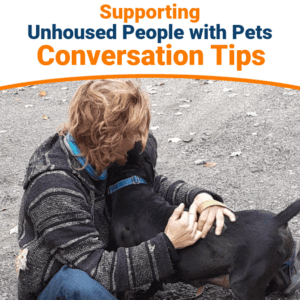 Why Everyday Conversations Matter More Than You Think
We often think change happens through big campaigns or formal presentations, but in reality, it frequently begins in everyday moments. A casual conversation over coffee. A comment thread on social media. A question from a family member.
Over time, we have found that many misconceptions about pets living in poverty come from a lack of understanding—not a lack of compassion. When people are given accurate, respectful information, they often shift their perspective quickly.
That’s why supporting unhoused people with pets doesn’t require a microphone or a platform. It simply requires a willingness to speak thoughtfully and respectfully when the opportunity arises.
Start with Empathy, Not Correction
When someone makes a negative comment about unhoused individuals with pets, the instinct may be to correct them immediately. While the intention is good, the approach matters.
We recommend starting with empathy. Acknowledge the concern behind the comment before offering additional context. For example, someone might say, “If they can’t afford a pet, they shouldn’t have one.”
A response grounded in empathy might sound like this:
- “I understand why that might seem concerning. What we’ve seen is that many unhoused individuals prioritize their pets’ needs even above their own.”
- “What community organizations have found is that these pets are often deeply loved and well cared for, even in difficult circumstances.”
This approach keeps the conversation open rather than defensive, making it more likely the other person will actually hear what you’re saying.
Share Realities That People May Not Know
One of the most powerful ways to support unhoused people with pets is by sharing simple, factual insights that challenge common assumptions.
For example:
- Many unhoused guardians will go without food to ensure their pets are fed.
- Companion animals often provide emotional stability and safety for their guardians.
- Barriers to veterinary care are often systemic, not personal failings.
- Companion animals often help individuals have purpose and focus on personal recovery needs.
We have seen firsthand how strong the human-animal bond is in these situations. A pet is not a burden—it is often a lifeline.
When you share these realities calmly and respectfully, you help others move from judgment to understanding.
Use Language That Respects Dignity
The words we choose matter. Language can either reinforce stigma or help dismantle it.
Within our organization, we intentionally use terms like “unhoused individuals,” “guardians,” and “pets living in poverty” because they reflect dignity and respect. Avoiding harsh or judgmental phrasing helps keep the focus where it belongs—on compassion and solutions.
For example, you might say, “There are real barriers to care, but there are also organizations working to provide support so people and their pets can stay together.”
Using respectful language can keep the conversation constructive and forward-looking.
Responding to Negative Comments on Social Media
Social media can be one of the most challenging places to have these conversations. Emotions run high, and comments can feel blunt or harsh.
Our team recommends keeping responses:
- Short: You don’t need to write an essay.
- Calm: Avoid matching negativity with negativity.
- Informative: Offer one clear, helpful insight.
For example:
- “Organizations in our community have found that pets are often the most stable and loving relationship in someone’s life. Supporting them helps both the person and the animal.”
- “There are programs that provide free veterinary care and food support—solutions exist that keep families together.”
Not every comment will turn into a meaningful exchange, and that’s okay. The goal isn’t to “win” an argument—it’s to introduce a different perspective for anyone reading.
Focus on Solutions, Not Just Problems
It’s easy for conversations to center around what’s wrong. While it’s important to acknowledge challenges, we always aim to highlight solutions.
When discussing supporting unhoused people with pets, consider mentioning:
- Preventive care, like spay and neuter services
- Access to food security programs
- Mobile veterinary clinics and outreach efforts
We have found that when people see practical, positive solutions, they feel more hopeful—and more willing to support those efforts.
Know When to Step Back
Not every conversation will be productive, and that’s important to recognize. If a discussion becomes hostile or closed off, it’s okay to disengage respectfully. Supporting unhoused people with pets is about building understanding over time, not forcing agreement in a single interaction.
Even a brief, thoughtful comment can plant a seed that grows later.
Lead by Example in Your Community
Sometimes, the most powerful message isn’t what you say—it’s what you do. Sharing a post about a local outreach effort, volunteering your time, or donating to organizations that provide preventive care all reinforce the values behind your words.
When your actions align with your conversations, your message becomes more authentic and impactful.
Why This Matters for Southern Oregon
In Southern Oregon, we see both the challenges and the opportunities every day. The need is real, but so is the compassion within our community. By supporting unhoused people with pets through everyday conversations, we create a more informed and empathetic environment—one where people and their companion animals are treated with dignity.
These conversations may seem small, but they add up. They shape how communities respond, how policies evolve, and how support systems grow.
Moving Forward Together
We believe that meaningful change starts with understanding. When we approach conversations with empathy, share real-world insight, and focus on solutions, we help build a community that values the human-animal bond in all circumstances.
If you’re looking for a way to make a difference, start with your next conversation. It may be more powerful than you think. And if you want to take the next step, we invite you to partner with us. Your support helps provide preventive care, food resources, and critical services that keep pets healthy and with the people who love them.
Together, we can continue supporting unhoused people with pets—one conversation at a time.
Reader Interactions