
Flea and tick prevention for pets is one of the most important parts of summer pet care in Southern Oregon. As temperatures warm and more people spend time outdoors with their dogs and cats, fleas and ticks become a greater concern for pets, guardians, and the community as a whole.
At Rogue Valley Street Dogs, we see how deeply people love their companion animals. In our experience, pets are often family, comfort, protection, and stability, especially for guardians facing financial hardship or housing insecurity. Preventive care helps keep those pets healthier, more comfortable, and better able to stay with the people who love them.
Why is flea and tick prevention important for pets in Southern Oregon?
Flea and tick prevention protects pets from discomfort, skin irritation, infection, anemia, and tick-borne disease risks. In Southern Oregon, summer activity in tall grass, on trails, in parks, at campsites, and in shaded outdoor areas can increase exposure. Consistent prevention and regular tick checks help keep dogs and cats healthier and reduce stress for their guardians.
Why Are Fleas and Ticks a Bigger Summer Concern?
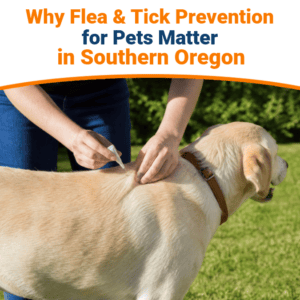 Southern Oregon summers invite people and pets outdoors. Dogs walk through dry grass along neighborhood roadsides. Cats may explore shaded yards, brush piles, barns, and garden edges. Families take their pets camping, hiking, visiting parks, or spending time near rivers and wooded areas. These are exactly the kinds of places where fleas and ticks can thrive.
Ticks are especially concerning because they wait on grasses, shrubs, leaf litter, and low vegetation for a host to pass by. Once attached, they can be difficult to see under thick fur or around sensitive areas like ears, armpits, toes, and collars. Fleas, meanwhile, can multiply quickly and spread from one animal to another, especially when pets share bedding, crates, vehicles, outdoor spaces, or close living areas.
Our team recommends treating flea and tick prevention as part of basic summer pet care, not as an afterthought. By the time a pet is scratching constantly or a guardian finds several ticks, the animal may already be uncomfortable. Preventive products, routine checks, and early action can reduce that burden.
Are Ticks Increasing in Oregon?
Ticks have become a bigger concern across Oregon in recent years, and many guardians are hearing more warnings about checking their pets after time outdoors. Mild winters, moisture, and changing seasonal patterns can extend tick activity, which means exposure may begin earlier and last longer than many people expect. In Southern Oregon, where pets may spend time in brushy, grassy, wooded, or rural areas, that matters.
Local and statewide health organizations continue to encourage awareness because tick encounters can happen in everyday places, not just deep in the woods. A dog does not need to go on a long backcountry hike to pick up a tick. A walk along a trail edge, time in an overgrown lot, a shaded campsite, or a patch of tall grass can be enough.
For pets living with guardians who may not have regular access to veterinary care, the risk can be even more stressful. A flea infestation or tick bite may seem small at first, but when care is hard to afford, small problems can become larger problems. That is why preventive care is so important to our mission.
What Problems Can Fleas Cause for Dogs and Cats?
Fleas are more than a nuisance. They can cause intense itching, skin inflammation, hair loss, and open sores from scratching or chewing. Some pets are allergic to flea saliva, so even a few flea bites can trigger a painful reaction. Young, elderly, or medically fragile animals may be especially vulnerable if fleas become heavy enough to contribute to anemia.
Fleas can also carry tapeworms. If a dog or cat swallows an infected flea while grooming, that pet may develop a tapeworm infection. This can add another layer of discomfort and may require veterinary treatment.
In our experience, flea prevention is also about protecting the human-animal bond. When a pet is miserable from fleas, the guardian is often miserable too. They may be losing sleep, trying to soothe their animal, and worrying about a problem they cannot easily afford to fix. Preventive support can bring real relief.
What Problems Can Ticks Cause for Dogs and Cats?
Ticks can irritate the skin at the bite site, cause swelling, and sometimes lead to infection if the area is scratched or inflamed. More importantly, some ticks can transmit diseases to animals and people. Not every tick carries disease, and not every bite causes illness, but prevention is still the safest approach.
Dogs are more likely than cats to encounter ticks during walks, hikes, and outdoor adventures, but cats can also pick up ticks, especially if they spend time outside. Long-haired pets can be harder to check thoroughly, and small ticks can be easy to miss.
Because tick-borne illness symptoms can be vague, guardians should watch for changes after a tick bite. Limping, fever, tiredness, swollen joints, loss of appetite, or unusual behavior are all reasons to contact a veterinarian. When veterinary care is difficult to access, early prevention becomes even more valuable.
How Can You Check Your Pet for Ticks?
Our team recommends checking dogs and cats after time outdoors, especially after walks through tall grass, brush, wooded trails, campsites, irrigation ditches, fields, or shaded yard edges. A quick check can become a simple routine, like filling the water bowl or wiping dusty paws.
- Start at the head and ears. Ticks often hide around ears, behind ears, near eyelids, and under collars.
- Use your fingers like a comb. Slowly feel through the fur for small bumps attached to the skin.
- Check warm, protected areas. Look under legs, between toes, around the tail, near the groin, and under harnesses or collars.
- Use good light. Small ticks can look like dark specks, scabs, or tiny seeds.
- Repeat later. Some ticks are easier to feel once they have been attached for a little while, so a second check can help.
What Should You Do If You Find a Tick on Your Dog or Cat?
If you find a tick, stay calm. Removing it correctly is important. Do not burn it, cover it in petroleum jelly, twist it with your fingers, or use harsh chemicals on your pet. These methods can irritate the skin, hurt the animal, or make removal harder.
- Use fine-tipped tweezers or a tick-removal tool. Put on gloves if you have them.
- Grasp the tick close to the skin. Try to hold the tick at the mouthparts, not the swollen body.
- Pull upward with steady pressure. Do not jerk or crush the tick.
- Clean the area. Use soap and water or a pet-safe antiseptic if available.
- Save or photograph the tick. If your pet becomes sick, identification may help your veterinarian.
- Watch the bite site. Redness, swelling, discharge, pain, or ongoing irritation should be checked by a veterinarian.
If part of the tick appears to remain in the skin, do not dig deeply into the pet’s skin trying to remove it. Clean the area and contact a veterinarian for guidance. Also seek veterinary advice if your pet seems weak, feverish, painful, or unusually tired after a tick bite.
How Can Guardians Reduce Flea and Tick Exposure?
Prevention works best when it combines the right product with everyday habits. Not every product is safe for every animal, and flea and tick products made for dogs should never be used on cats unless the label clearly says they are safe for cats. Some dog products contain ingredients that can be dangerous or even life-threatening for cats.
- Use species-appropriate (cat or dog) prevention. Choose products designed for your pet’s age, weight, species, and health needs.
- Keep bedding clean. Wash blankets, pet beds, and soft items regularly when possible.
- Check pets after outdoor time. Make tick checks part of summer routines.
- Reduce tall grass and brush when possible. Ticks like shaded, protected areas with vegetation.
- Avoid sharing unknown products. A medication that is safe for one pet may not be safe for another.
- Ask for help early. If fleas or ticks are becoming a problem, reach out before the issue becomes overwhelming.
How Rogue Valley Street Dogs Helps with Preventive Care
Rogue Valley Street Dogs provides compassionate support for pets living in poverty and the guardians who love them. Our work includes preventive services that help reduce suffering before it becomes an emergency. When we have flea and tick prevention in stock, we are able to provide it to the pets we serve.
Availability can vary because we depend on donations, supplies, and community support. Still, every dose matters. Flea and tick prevention can help a dog sleep more comfortably, protect a cat from painful itching, and give a guardian peace of mind. It is a simple act of care with a meaningful ripple effect.
We have found that many of the people we serve are doing everything they can with limited resources. They notice when their pets are uncomfortable. They worry when something is wrong. They often go without things they need, so their animals can eat, stay warm, or receive care. Preventive supplies help lighten that load while honoring the bond they already have with their pets.
Why Preventive Pet Care Supports the Whole Community
Flea and tick prevention for pets is not only about one animal at a time, though each animal matters deeply. It also supports public health, shelter prevention, and community well-being. Healthier pets are less likely to need urgent intervention. Guardians are less likely to face impossible decisions. Local shelters and veterinary partners feel less pressure when preventable problems are addressed early.
In Southern Oregon, compassion and prevention go hand in hand. A flea treatment, tick check, or donated preventive product may seem small, but for a pet living in poverty, it can mean comfort, dignity, and better health. For the guardian, it can mean one less crisis to manage. For the community, it is another step toward keeping beloved companion animals safe and with the people who love them.
How You Can Help
If you want to support summer pet care in Southern Oregon, consider donating to Rogue Valley Street Dogs or helping provide preventive supplies when they are needed most. Flea and tick prevention, pet food, collars, leashes, and financial contributions all help our team serve animals and guardians with dignity.
Every gift supports a practical, compassionate solution. Together, we can help more dogs and cats stay healthier through the summer and help more people keep their beloved pets by their side.
Frequently Asked Questions
How often should I check my pet for ticks in Southern Oregon?
Check your pet after outdoor time, especially after walks through grass, brush, wooded areas, campsites, or rural properties. During summer, daily checks are helpful for pets that spend a lot of time outside.
Can I use dog flea and tick prevention on my cat?
No. Some flea and tick products made for dogs can be dangerous for cats. Always use a product labeled for your pet’s species, weight, and age, and ask a veterinarian if you are unsure.
Does Rogue Valley Street Dogs provide flea and tick prevention?
Rogue Valley Street Dogs provides flea and tick prevention periodically when supplies are available. Because availability depends on stock, donations, and community support, preventive products may not always be on hand.
Reader Interactions